

Crowns and Bridges in Whitchurch-Stouffville, ON
Lifelike Restorations, Built to Last
A crown or bridge isn't just a cosmetic fix. It's a structural solution that protects your oral health and restores the way your mouth works. At Stouffville Dental Arts, we take the time to get restorations right: well-fitted, carefully placed, and built to hold up over the long term.

Your Bite, Back to Normal
A damaged or missing tooth affects more than the tooth itself. It changes how you chew, puts stress on surrounding teeth, and can shift your bite over time. A well-fitted crown or bridge restores proper function so the rest of your mouth isn't compensating for the gap.
Protection That Holds
Crowns seal and strengthen damaged teeth so they're no longer vulnerable to further decay or fracture. Bridges fill the space left by a missing tooth and keep neighbouring teeth from drifting out of position. Both are long-term solutions built to last with proper care.


A Natural-Looking Result
We match your restoration to the colour and shape of your surrounding teeth. The goal is a result that looks like it belongs there, because good restorative work shouldn't be noticeable.
Find Out What Your Plan Covers

What Is a Dental Crown?
A dental crown is a custom-fitted cap that fits over a damaged, weakened, or heavily restored tooth. It covers the entire visible surface of the tooth, restoring its shape, strength, and appearance. Crowns are used when a tooth is too damaged for a filling but doesn't need to be removed.
Common reasons for a crown include:
- A tooth with a large cavity that can't be adequately restored with a filling
- A cracked or fractured tooth that needs to be held together
- A tooth that has been treated with a root canal and needs protection
- A worn-down tooth that has lost significant structure over time
- A misshapen or discoloured tooth that affects the appearance of your smile

What Is a Dental Bridge?
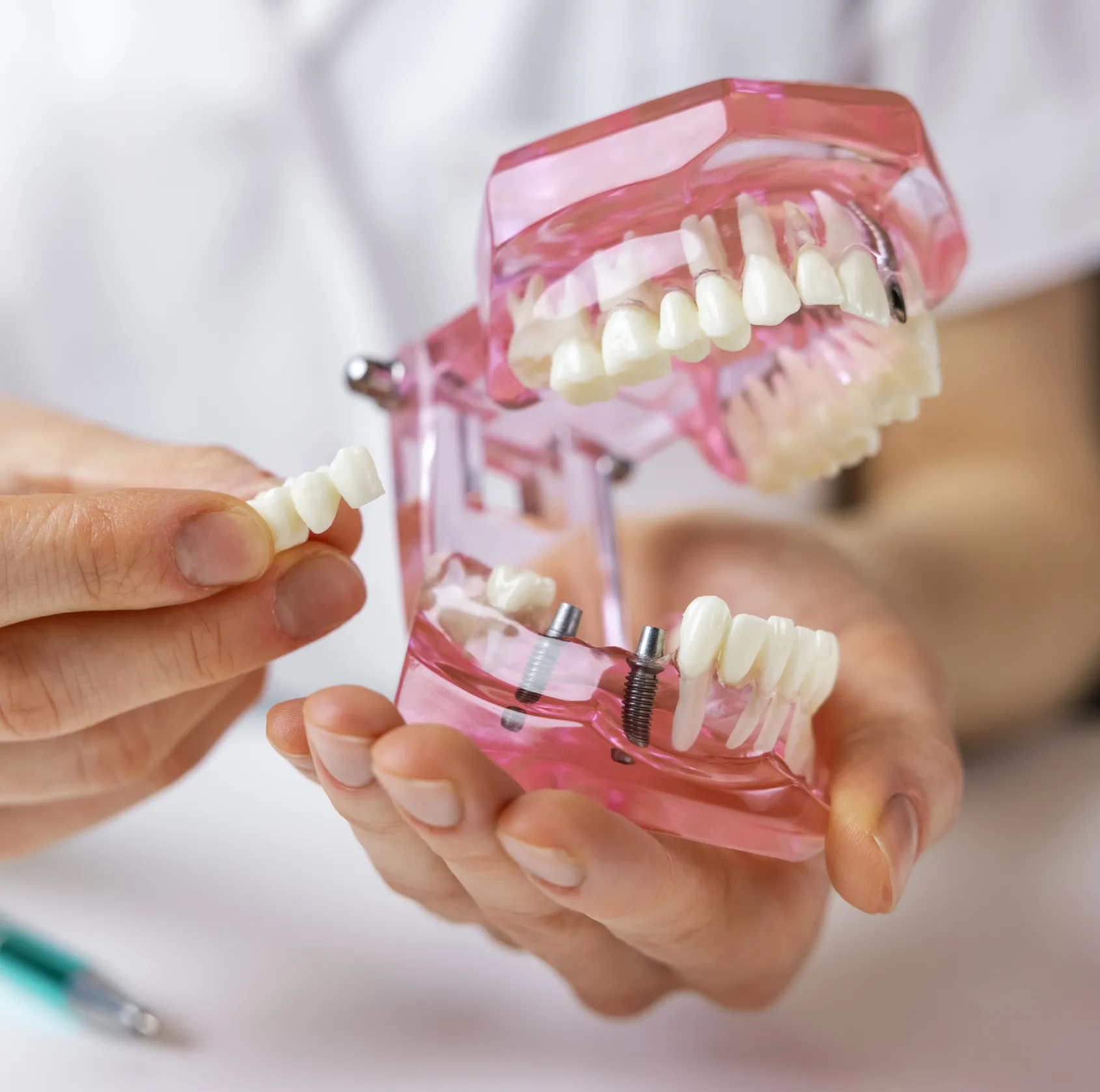
A dental bridge replaces one or more missing teeth by anchoring an artificial tooth to the natural teeth on either side of the gap. Those anchor teeth, called abutments, are fitted with crowns that support the replacement tooth in between.
A bridge is a good option when:
- You're missing one or more teeth in a row
- The teeth on either side of the gap are healthy enough to support a bridge
- You want a fixed, non-removable solution for tooth replacement
- You're not a candidate for a dental implant, or prefer not to pursue one

Meet Dr. Twisha Patel
More About Dr. Twisha Patel
For Dr. Twisha, dentistry is not just about treating teeth—it’s about building lasting relationships and making every patient feel at home in the dental chair.

What to Expect with a Crown
Getting a crown typically takes two appointments.
At your first visit, we prepare the tooth by removing any decay and reshaping it to fit the crown. We take a precise digital impression of the prepared tooth and the surrounding teeth, then place a temporary crown to protect the tooth while your permanent one is being made.
At your second visit, we remove the temporary crown, check the fit and colour of the permanent one, and cement it into place. We'll make any minor adjustments needed to make sure your bite feels right before you leave.
What to Expect with a Bridge
A bridge also requires two appointments. At your first visit, we prepare the two anchor teeth on either side of the gap by reshaping them to receive crowns. We take a digital impression and place temporary crowns in the meantime.
At your second visit, we fit the permanent bridge, check that it sits correctly and your bite feels comfortable, and cement it into place. We'll also show you how to clean underneath it properly so it stays in good shape long term.
Caring for Your Crown or Bridge
Crowns and bridges are durable, but they still need regular care to last. Here's how to keep yours in good shape:
- Brush twice a day and floss daily, paying extra attention around the base of the crown or under the bridge
- Use a floss threader or interdental brush to clean beneath a bridge where regular floss can't reach
- Avoid chewing on very hard foods like ice or hard candies, which can chip or crack a crown
- Wear a nightguard if you grind your teeth, as grinding puts significant stress on restorations
- Keep up with your regular checkups so we can monitor the fit and condition of your restoration over time

Why Patients Choose Stouffville Dental Arts

No Surprise Bills
Before any appointment, we walk you through what your insurance covers and what you'll owe. Always.
Your Comfort Is Built In
Netflix chairside, weighted blankets, and a curated comfort menu, because feeling at ease makes every visit better.


A Preventive-First Approach
We build the healthy foundation first. Any cosmetic work you invest in will last because it's built on solid ground.
We Accept CDCP
We accept all private insurance plans and the Canadian Dental Care Plan, so more families can access the care they deserve.

Frequently Asked Questions
Do you direct bill insurance for crowns and bridges?
Yes. We direct bill your insurer wherever possible, and accept the Canadian Dental Care Plan. Coverage for crowns and bridges varies by plan, so we'll review your benefits before your appointment and give you a clear picture of your expected costs upfront.
Can any tooth be saved with a crown?
Not always. If a tooth is too severely damaged or the root is compromised, extraction may be the more appropriate option. We'll be straightforward with you about what's worth saving and what isn't, and we'll talk through your options either way.
What happens if I don't replace a missing tooth?
When a tooth is missing, the surrounding teeth gradually shift toward the gap. This can affect your bite, create uneven wear, make cleaning harder, and lead to bone loss in the jaw over time. Replacing a missing tooth sooner is always better than waiting.
How do I clean under a bridge?
Regular floss can't pass under a bridge the way it does between natural teeth. We recommend using a floss threader or an interdental brush to clean beneath the bridge each day. We'll show you exactly how at your appointment.
Will my crown or bridge look natural?
Yes. We match the colour and shape of your restoration to your surrounding teeth so the result looks like it belongs there. Most patients find that no one notices they have a crown or bridge at all.
What's the difference between a bridge and a dental implant?
A bridge uses the teeth on either side of the gap as anchors and doesn't require surgery. An implant replaces the tooth root with a titanium post and supports a crown independently. Both are effective solutions. We'll help you understand which option makes more sense for your situation.
Is a bridge a permanent solution?
A bridge is fixed in place and not removable by the patient, so it functions like a permanent restoration. It can last many years with proper care, though it may eventually need to be replaced.
Can a crown fall off?
It's uncommon, but it can happen. If your crown comes loose or falls off, keep it safe, avoid chewing on that side, and call us. We'll get you in promptly to recement or replace it.
Does getting a crown hurt?
The preparation appointment is done under local anaesthetic, so you won't feel pain during the procedure. Some sensitivity around the tooth is normal for a few days afterward. If discomfort persists beyond that, let us know.
How long do crowns and bridges last?
With proper care and regular checkups, crowns and bridges typically last ten to fifteen years or longer. Their lifespan depends on the material used, where they're placed in the mouth, and how well they're maintained at home.
Find Us in Stouffville
If you're new to the area or simply looking for a practice that feels like home, we'd love to be your dental team. Stouffville Dental Arts is now accepting patients of all ages.
Convenient parking available on site.